


Posted On: April 08, 2026
Custom Kitchen Countertops vs Bathroom Countertops: Key Differences for Virginia Homes
When Virginia homeowners plan a renovation, countertops are almost always part of the conversation. A common question during kitchen and bathroom remodels happening at the same time is whether the same stone and slab specs work for both spaces. The short answer: not always.
Kitchen and bathroom countertops share some DNA, but their demands are genuinely different. Understanding that distinction before committing to a material or design can save you money, frustration, and an unplanned future replacement.
The Kitchen Countertop: Built for Daily Combat
Your kitchen countertop takes a beating every single day. Hot pans, sharp knives, acidic spills, raw meat prep — it all adds up. For Virginia homeowners sourcing custom stone countertops in Virginia, prioritising materials that hold their own under real working conditions is non-negotiable. Here is what to consider:
- Granite remains one of the most popular choices for kitchens. It is heat-resistant, incredibly durable, and no two slabs look exactly alike.
- Quartz offers engineered consistency. It is practically non-porous right out of the box, which simplifies cleaning and maintenance.
- Edge profiles matter more in kitchens. An eased or bevelled edge resists chipping better than an ornate ogee profile when sliding pots across the surface.
- Thickness plays a key role too. Most kitchen countertops run 3 cm (about 1¼ inches), which provides the structural integrity a large island or extended prep surface needs.
Both granite and quartz suit the high-contact, high-moisture environment of a kitchen well.
The Bathroom Countertop: A Different Kind of Investment
Bathroom countertops live in a different world. There is no slicing, no hot pans, no constant scrubbing of cutting boards. What you deal with instead is persistent humidity, makeup residue, and chemical exposure from skincare products. It is also a highly visible focal point. Guests notice it.
This opens the door to materials that would be risky in a kitchen:
- Marble is softer and more porous. It etches easily under acidic cleaners, which makes it a poor fit near a stove. In a bathroom with light daily use, properly sealed marble looks stunning and holds up well for years.
- Vanity tops in bathrooms are often smaller. This means you can splurge on a more exotic slab or premium finish without stretching the entire renovation budget.
- Bathrooms are also one of the best places to explore custom design countertops. Vessel sink cutouts, waterfall edges, and integrated backsplashes feel intentional and elegant here rather than excessive.
What Changes When You're in Virginia
Virginia's climate adds another layer to consider. Humid summers, particularly in areas like Fredericksburg and Northern Virginia, mean bathroom ventilation is not always ideal. Here is why that matters for natural stone countertops:
- Stone absorbs moisture over time when not sealed properly. This leads to staining and long-term structural problems.
- Regular sealing schedules matter more in Virginia than in drier regions.
- Local fabricators with experience in regional conditions make real, informed recommendations. They do not just sell you whatever stone looks best in the showroom.
When selecting countertops, Virginia homeowners benefit most from working with professionals who understand these regional conditions firsthand.
The Practical Overlap
A common mistake homeowners make is assuming that because a stone worked in one room, it will work in the other.
- Leathered granite that looks incredible on a kitchen island can feel visually heavy in a smaller bathroom.
- A delicate white marble vanity top that photographs beautifully creates daily maintenance anxiety next to a kitchen sink.
The best approach when renovating both spaces at once is to treat them as related but independent decisions. Using consistent material families, such as granite in the kitchen and complementary quartzite in the bathroom, creates visual cohesion without forcing a poor material match in either space.
Why Granite Maker Stands Apart for Virginia Homeowners
Granite Maker has served Virginia homeowners and builders since 2006, with roots in the stone industry going back to 1975. Based in the Fredericksburg area, their showroom features over 1,000 stone options including granite, quartz, marble, and porcelain. Three generations of family craftsmanship go into every project.
As licensed, insured professionals with in-house fabrication, the Granite Maker team handles everything from templating to final installation. Whether you are upgrading a kitchen island or designing a custom vanity, they guide you through the right material for each specific space. Free consultations, transparent pricing, and up to 40% off select stones make them a trusted first call for any renovation in Virginia.
Frequently Asked Questions (FAQs)
- Why can't I use marble for my kitchen countertop if I love the look?
Marble etches and stains easily under the acidic spills and heavy daily use a kitchen sees. It performs far better as a bathroom vanity surface, where traffic is lighter and the visual impact is just as strong.
- Does Virginia's humidity affect which stone I should choose?
Yes, it does. High humidity in areas like Northern Virginia and Fredericksburg speeds up moisture absorption in unsealed stone. This makes proper sealing and choosing denser materials like granite or quartz more important here than in drier climates.
- What is the difference between a standard vanity top and a custom design countertop?
A standard vanity top comes in fixed sizes with basic cutouts. A custom design countertop lets you choose the exact slab, edge profile, sink cutout style, and integrated backsplash. The result feels tailored to the space rather than off-the-shelf.
- How do I choose between granite and quartz for a kitchen countertop?
If you want natural variation and strong heat resistance, granite is the better pick. If you prefer a uniform pattern and a low-maintenance surface, go with quartz. Both perform well in high-use kitchen environments.
- Can I use the same fabricator for both my kitchen and bathroom countertops?
Yes, and it is often the smarter move. A single fabricator helps you select complementary materials across both spaces. This keeps the look consistent and maintains quality across templating, fabrication, and installation.
Article Author

Arobit
Blog Admin
Tags
Latest Posts
-

Best Bathroom Vanity Tops for Fredericksburg, VA Homes
-

Which Granite Countertop Thickness Should You Choose: 2 cm or 3 cm?
-

Upgrade Your Outdoor Space with Natural Stone Kitchens
-
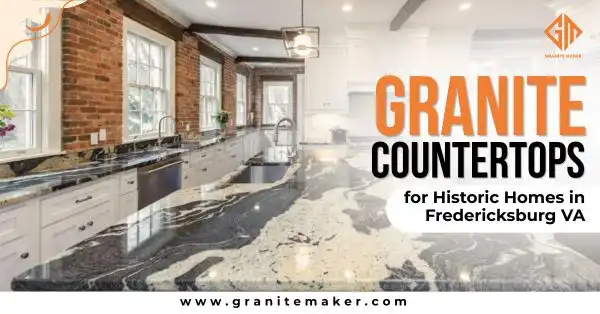
Granite Countertops for Historic Homes in Fredericksburg VA
-

How to Maintain Granite Countertops in Fredericksburg VA Climate Conditions
Similar Posts
-
Best Bathroom Vanity Tops for Fredericksburg, VA Homes
-
Which Granite Countertop Thickness Should You Choose: 2 cm or 3 cm?
-
Upgrade Your Outdoor Space with Natural Stone Kitchens
-
Granite Countertops for Historic Homes in Fredericksburg VA
-
How to Maintain Granite Countertops in Fredericksburg VA Climate Conditions
© 2025 Granite Maker. All rights reserved.
Do not copy any content (including images) without consent.